
Appearance
Enzymes
Enzymes
Enzymes are proteins that catalyze (i.e., increase the rates of) chemical reactions. In enzymatic reactions, the molecules at the beginning of the process, called substrates, are converted into different molecules, called products. Almost all chemical reactions in a biological cell need enzymes in order to occur at rates sufficient for life.
Enzymes are used in the chemical industry and other applications when extremely specific catalysts are required. However, enzymes in general are limited in the number of reactions they have evolved to catalyze and also by their lack of stability in organic solvents and at high temperatures.
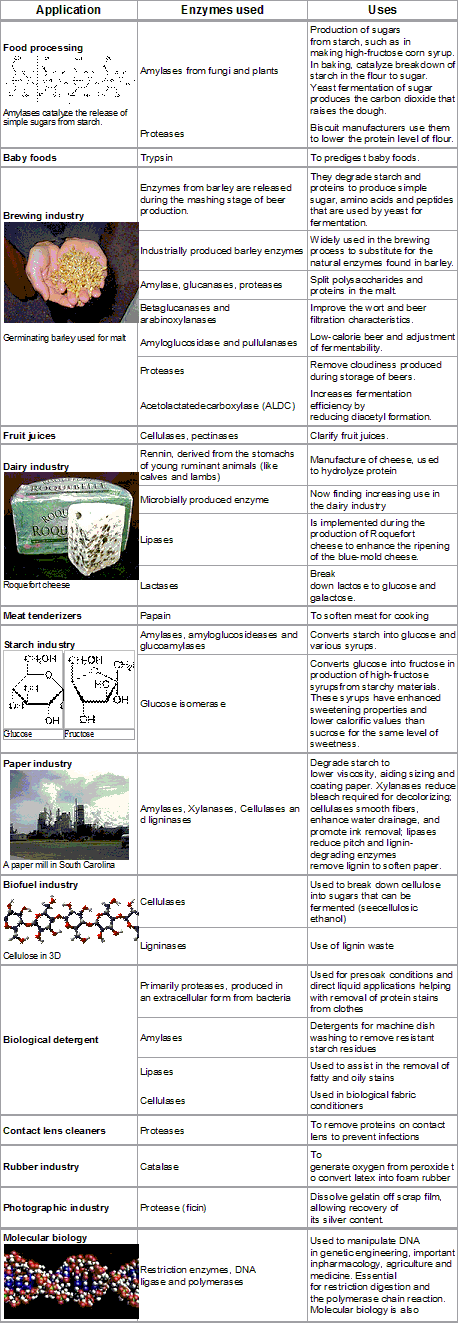
Below is an overview of the uses of enzymes.
In DOHSBase Compare only a few Enzymes are presented. There just a few Occupational Exposure Limits for Enzymes. Many enzymes are determine with ELISA-techniques. These methods are not standardized and normalized. They are therefore not included as the measurement methods.
Back to: Biological factors.
Back to: Overview of of the type of substances.